
FADE IN:
INT. DAS AUTORENZIMMER - DURCHGEHEND
Ein Cursor blinkt auf einer leeren Seite. Dann beginnen Sie zu schreiben.
POSEIDON
Gib mir deine Geschichte. Ich bringe ihre Figuren auf die Bühne und spiele ihre Szenen durch, bevor du eine einzige Seite selbst geschrieben hast.
Poseidon CAS ist kein Schreibassistent, sondern ein Autorensystem für Drehbücher. Über Nacht wird aus einer Idee ein vollständiger erster Entwurf, mit Figuren und Dialogen, die von der ersten bis zur letzten Seite konsistent bleiben.
INT. DAS PROBLEM - TAG
Die meisten KI-Schreibwerkzeuge vergessen, wer deine Figuren sind
Sie brauchen für jede Zeile einen neuen Prompt und verlieren nach wenigen Seiten den Ton. Poseidon besetzt und spielt die Szenen durch, bevor es schreibt. Dadurch bleiben Figuren, Dialoge und Beziehungen über das gesamte Drehbuch konsistent.
INT. SO FUNKTIONIERT'S - FORTLAUFEND
Drei Akte, ein Entwurf
Der Ablauf folgt der Struktur, die du ohnehin kennst.
Erster Akt
Die Geschichte kommt rein
Du gibst deine Geschichte ein, mit Figuren, Ton und Bogen. Poseidon liest sie und geht in die Vorproduktion.
Zweiter Akt
Nachbearbeiten und Regeln setzen
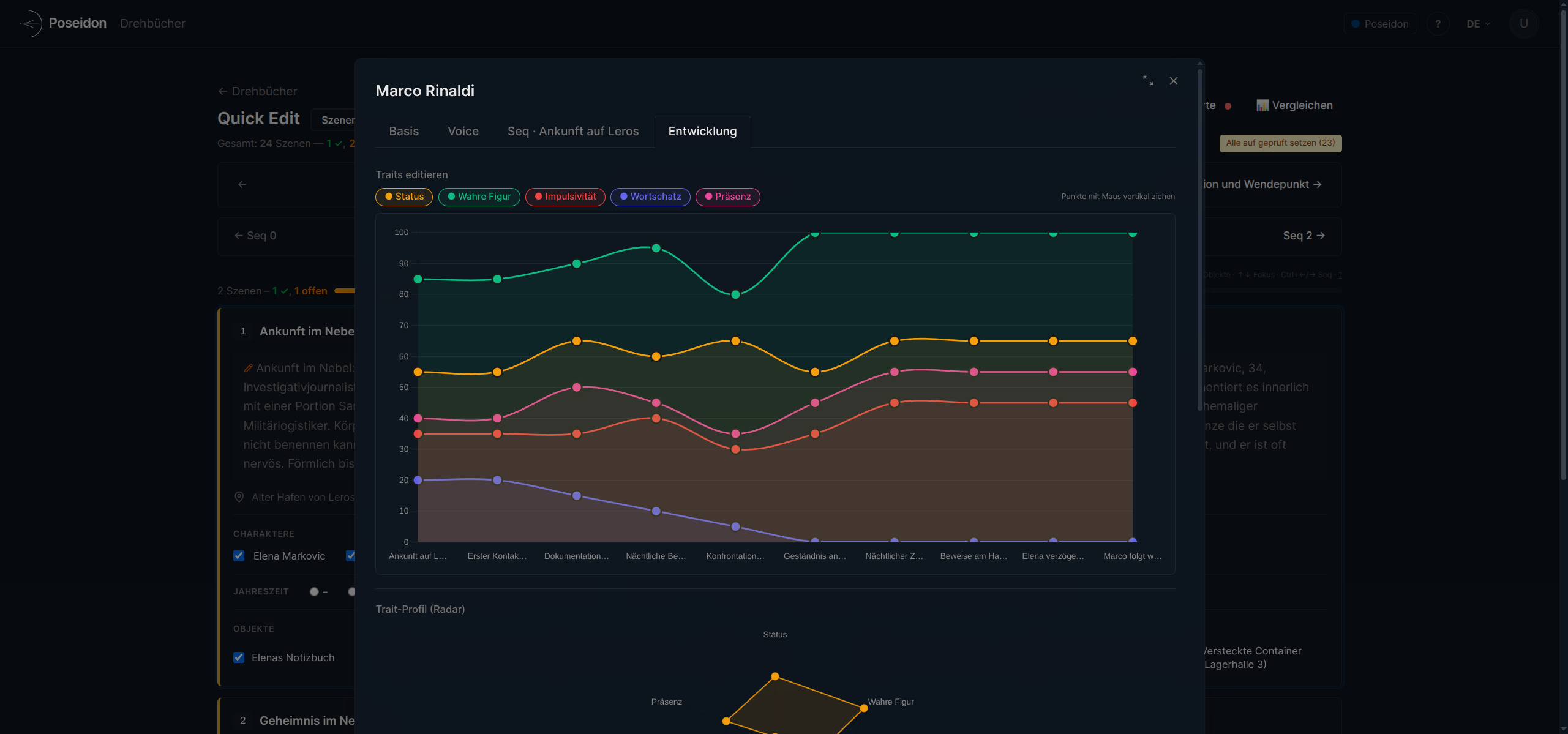
Du verfeinerst, was importiert wurde, und legst für jede Figur fest, wie präsent, wie impulsiv, wie wortreich sie ist.
Dritter Akt
Der Schreibprozess
Poseidon besetzt und spielt die Szenen durch. Ein Netzwerk spezialisierter Agenten entwickelt Szene für Szene den ersten Drehbuchentwurf. Jede Figur bleibt dem Charakter treu, den du festgelegt hast.
INT. EIN BLICK INS SYSTEM - TAG
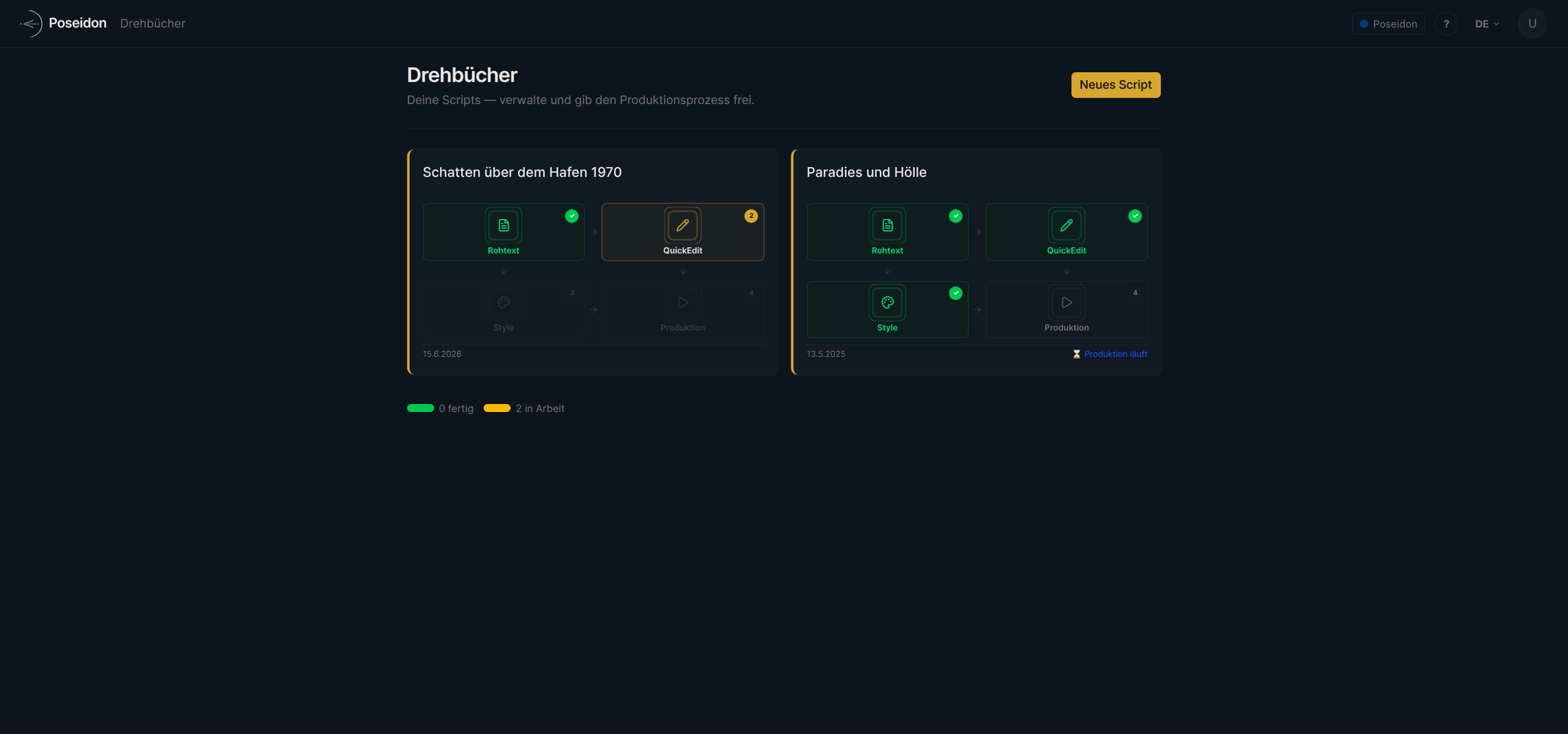
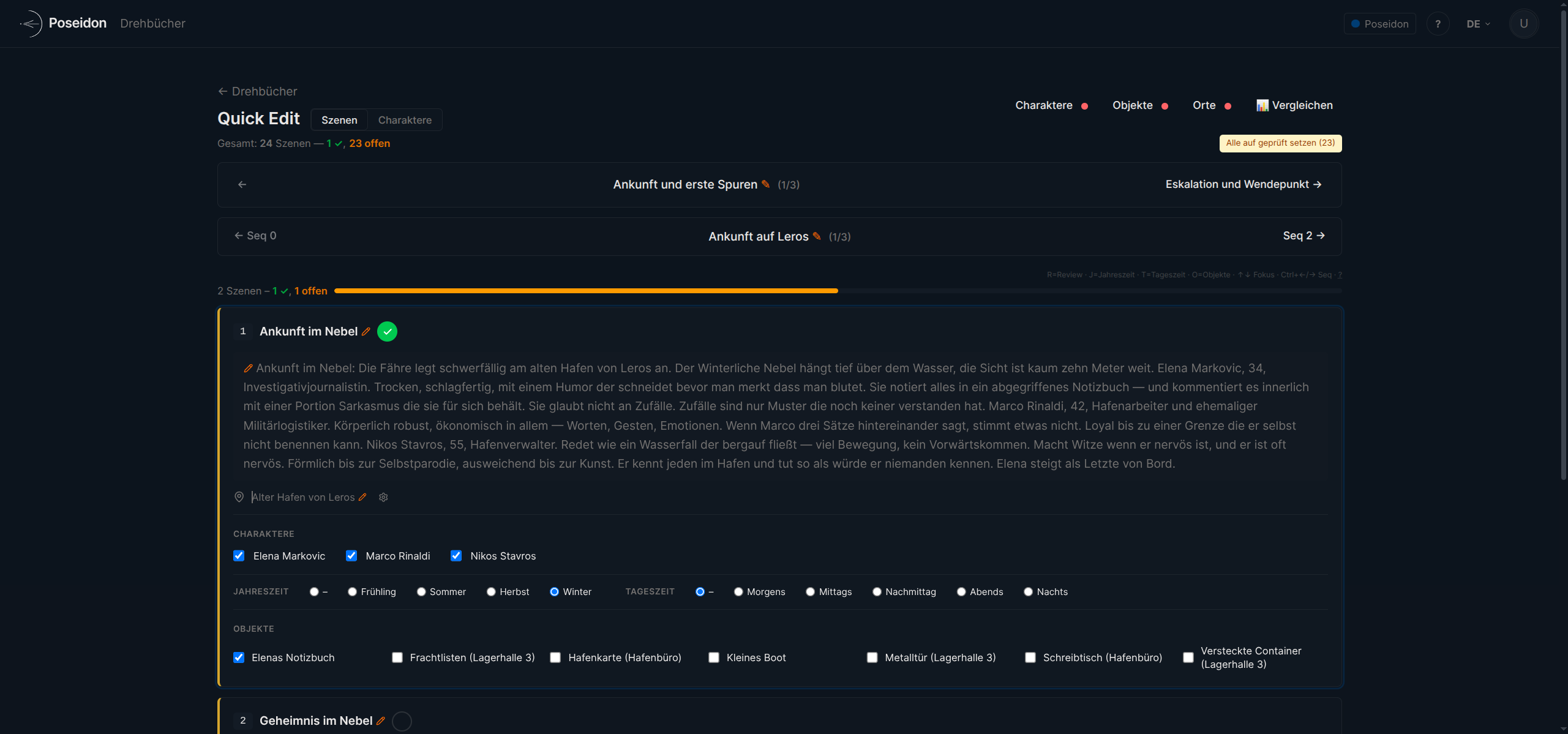
So sieht der Workflow aus
Kein Mockup, das ist die echte Oberfläche.
INT. FÜR WEN - TAG
Gebaut für Menschen, die eine Geschichte selbst verantworten
Drehbuchautoren
Ein Rohschnitt, der als Ausgangspunkt für die eigene Fassung trägt, kein fertiger Film.
Produzenten
Eine Idee lässt sich lesbar machen, bevor Budget für die Entwicklung fällt.
Autorenteams
Konsistenz über hunderte Seiten, auch wenn viele Szenen parallel entstehen.
INT. DER URSPRUNG - NACHT
Der Vorteil einer anderen Perspektive
Hinter Poseidon CAS steht die Präzision aus zwei Jahrzehnten Softwarearchitektur. Entwickelt in vollkommener Unabhängigkeit – mit vollem Fokus, technischer Klarheit und einem frischen Blick auf die Workflows der Filmbranche. Von der ersten Idee auf Leros bis zum fertigen System.
Lass deine Geschichte spielen
RECHTLICHES
Impressum & Datenschutz
Projekt: Poseidon CAS (Pre-Incorporation)
Verantwortlich: Frank Markwort
Mobiler Betriebsstandort
S/Y Poseidon
Flagge: Polen · Register: PL.1009WXD022
Heimathafen: Hel
Aktueller Standort: Segelrevier Griechenland
Direkter Kontakt
E-Mail: frank@poseidon-cas.com
Poseidon CAS ist ein aktives Pre-Incorporation-Projekt zur Entwicklung eines KI-gestützten Autorensystems für Drehbücher (Cinematic Authorship System). Diese Website dient ausschließlich der Information und der Kontaktaufnahme mit potenziellen Seed-Investoren, Partnern und frühen Unterstützern. Die offizielle Firmengründung erfolgt nach Abschluss der ersten Finanzierungsrunde.
Verantwortlicher: Frank Markwort · frank@poseidon-cas.com
Hosting & Server-Logs
Beim Aufruf dieser Website verarbeitet der Hosting-Anbieter technisch notwendige Daten (u. a. IP-Adresse, Datum und Uhrzeit des Abrufs, aufgerufene Seite, Browser-Typ). Die Verarbeitung ist für den Betrieb und die Sicherheit der Website erforderlich. Rechtsgrundlage: Art. 6 Abs. 1 lit. f DSGVO (berechtigtes Interesse).
E-Mail-Kontakt
Wenn du uns per E-Mail kontaktierst, verarbeiten wir deine E-Mail-Adresse und den Inhalt deiner Nachricht, um deine Anfrage zu beantworten. Rechtsgrundlage: Art. 6 Abs. 1 lit. b DSGVO (vorvertragliche Maßnahmen) bzw. lit. f (berechtigtes Interesse an der Beantwortung).
Keine Cookies, kein Tracking
Diese Website verwendet keine Cookies, keine Analyse-Tools und keine Werbe- oder Tracking-Dienste.
Speicherdauer
Server-Logs werden nach kurzer Frist automatisch gelöscht. E-Mail-Korrespondenz wird nur so lange gespeichert, wie es für die Bearbeitung der Anfrage erforderlich ist.
Deine Rechte
Du hast nach der DSGVO das Recht auf Auskunft, Berichtigung, Löschung, Einschränkung der Verarbeitung, Datenübertragbarkeit und Widerspruch. Zudem kannst du dich bei einer Datenschutz-Aufsichtsbehörde beschweren.